Saturday, July 29, 2006

Is Outer Space Sex Really That Complicated?

If this is true, then future space colonists may be in for a major disappointment.

(MSNBC) Having sex in the weightlessness of outer space is the stuff of urban legends and romantic fantasy--but experts say that there would be definite downsides as well.

Spacesickness, for instance. And the difficulty of choreographing intimacy. And the potential for sweat and other bodily fluids to, um, get in the way. [...]

"Sex in space is not just a good idea, it's survival," said Vanna Bonta, a writer who blends romance with space travel and quantum physics in the novel "Flight."


The article later on goes to list several reasons why this event may be "underwhelming," and the list does not look pretty. Vanna Bonta has designed a "2suit" to deal with the problems of weightlessness while...um...you know, but I am going to wager that honey mooners may opt for their birthday suit instead.

China Farming In Space?

Apparently the red dragon nation is preparing to launch another satellite which will conduct experiments on breeding plants in outer space.

(Earth Times) BEIJING: China is expected to launch its first satellite for breeding plant seeds in September. The satellite will be launched from the Jiuquan satellite launch center, according to officials of the Commission of Science, Technology and Industry for National Defense. It will make a 15-day space flight.

The satellite, named Shijian-8, would carry over 2,000 varieties of plant seeds in nine categories and 180 groups, including seeds of grains, cash crops and plants, as well as seeds of fungi and molecular biomaterials that have been sequenced.


Before anyone claims that "natural food" is the way to go, they should examine the results with China's tampering. By exposing these seeds to radiation, China has been able to grow not only more food, but healthier grain as well, making it easier to feed their growing population.

(Earth Times) According to scientists, when seeds are exposed to special environment and subjected to phenomena like cosmic radiation and micro-gravity, they are likely to mutate and offer higher yields and better quality. [...]

China has already established space seed breeding centres in regions such as Beijing, Shanghai and Heilongjiang province. A government official said between 2001 and 2004, space-bred rice and wheat varieties had been planted in about 566,600 hectares of land, producing an additional 340,000 tons of grain.

Experiments show that vitamin content of vegetables grown from space seeds is 281.5 per cent more than in ordinary vegetables and microelements of ferrum, zinc and carotene are also higher than normal.


According to the article, China has done this several times, and it apparently is paying off by producing higher yields of crop. If more experiments like these are successful, it may be wise for future colonies with barren (or no) soil to simply grow their food in orbit rather than on the surface.

Saturn's Titan May Have Methane Lakes

Although I am probably late in the game reporting this, apparently Saturn's cloudy moon may harbor hydrocarbon lakes, making the moon prime real estate for colonization.

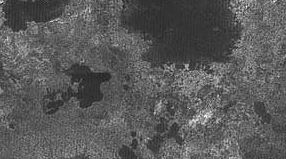
(Saturn Today) The Cassini spacecraft, using its radar system, has discovered very strong evidence for hydrocarbon lakes on Titan. Dark patches, which resemble terrestrial lakes, seem to be sprinkled all over the high latitudes surrounding Titan's north pole. [...]

Scientists have speculated that liquid methane or ethane might form lakes on Titan, particularly near the somewhat colder polar regions. In the images, a variety of dark patches, some with channels leading in or out of them, appear.


This is good news since it was assumed that Titan lacked methane lakes due to previous snap shots of the world. These lakes are located near the polar regions, although "rain drops" from Titan's atmosphere will hopefully create more of them.

Sunday, July 23, 2006

Life Support System For Mars, Moon

We still have a long way to go before we can establish colonies on Mars and the Moon. Despite our lack of knowledge on how the ecosystem on Earth operates (especially within a closed system) some scientists busy finding ways to eliminate those mysteries in order to keep us on our lunar neighbor as well as the red planet.

(Red Orbit) BEIJING (Xinhua) -- Scientists are doing ground-based experiments on life support systems so that humans can explore space and one day live outside the Earth's biosphere, for example on Mars or on the Moon. [...]

Nelson said that researchers have termed the project "Mars on Earth". They stress that substantial work needs to be carried out on Mars life support prototypes here on Earth before scientists will have the data base, confidence and ability to undertake similar projects in space or in lunar/Martian conditions.

The U.S. laboratory being used for the experiment, which covers an area of approximately 800 square meters, is located in Santa Fe, New Mexico. Scientists there are developing life support systems for space, such as water and waste water recycling, food production and air purification, and are also developing space engineering and technology for the Mars Base, Nelson said.


Scientists are trying to find ways to live in a closed system by recycling their waste products and living on a complete diet of plant food (as it looks like meat is off the menu for future colonists). This diet includes ten crops which include "rice, wheat, sweet potato, peanut, soybean, pinto bean, winter squash, beetroot, banana and papaya."

Although the experiment was not a total success (as they ran into some problems) their attempts and failures here on Earth will help us avoid serious problems while setting up habitations on the Moon and Mars.

Drilling For Water On Mars

Before we can actually establish a colony on the red planet, we first need to locate adequate supplies of water. If scientists are able to locate where possible sources of water lie on Mars (via new technology, rovers or telescopes) then it will be much easier to set up a colony on that dusty world.

But before humans are sent towards Mars, robots will have to do the dirty work first. And it looks like scientists are building one smart enough to handle the job.

(Red Orbit) NASA scientists plan to drill someday into the surface of Mars to look for water and signs of possible life. So, scientists are developing an automated, unmanned drill rig that can operate totally on its own, unsupervised for hours at a time. [...]

An eight-person team, made up of scientists and engineers from NASA Ames Research Center, Moffett Field, Calif., will set up drilling equipment that is a little taller than a human being, and sits in a footprint of about one square yard (one square meter).

Earth-based experiments will help scientists learn if synthetic brainpower is able to control a rig on Mars for many hours of drilling without human intervention. Future Mars missions with drills will likely have the ability to communicate with Earth only once or twice a day.


Since people will be unable to directly observe what is happening on Mars, scientists were forced to create an AI (or artificial intelligence) for the bot. Using lasers, vibration sensors and logic, this machine will be able to tell when to stop drilling, adjust and (hopefully) locate any problems that come along the way.

Called the Drilling Automation for Mars Exploration project (or DAME for short), this piece of technology will become very useful once we begin the first stages of colonizing Mars.

Exploring Mars Via Minibot Balls?

Mars is a harsh world and sending rovers to understand is not only expensive, but fairly limiting. But engineers and scientists may have found a new way to explore the red planet by using mini bot balls to scour the Martian surface.

(Universe Today) MIT engineers and scientist colleagues have a new vision for the future of Mars exploration: a swarm of probes, each the size of a baseball, spreading out across the planet in every direction.

Thousands of probes, powered by fuel cells, could cover a vast area now beyond the reach of today's rovers, including exploring remote and rocky terrain that large rovers cannot navigate. [...]

Scientists believe that lava tubes commonly seen on Mars are a promising location to search for signs of water. Lava tubes are tunnels left behind by underground lava flows. Signs of these tubes, which are also present in many locations on Earth, can be seen above ground.


Although observing the red planet through rovers is fine, what scientists need to do is locate water on the Martian surface. Despite being the focus of NASA and other space agencies for years, Mars desperately lacks resources for the human race.

These balls may be able to locate resources in hidden locations, since they are more expendable than a multi-million dollar rover.

Thursday, July 20, 2006

International Lunar Decade Begins In 2007?

The Planetary society is attempting to keep the vision of lunar exploration alive by calling for an international lunar decade set to begin next year in 2007.

(Moon Today) The Moon is "hot." China, India, Japan, Italy and the United States are all currently planning lunar missions, and the European Space Agency has the SMART-1 spacecraft in orbit there right now.

"The Moon is the first step beyond low Earth orbit for any space-faring nation," stated Louis Friedman, Executive Director of The Planetary Society, "and the next decade will see a number of nations taking that step."


With all that is going around in the world (ranging from bird flu to world war three via Iran) keeping the world community focused on lunar exploration is not only key, but a priority. Although the decade technically extends to 2019, (making it twelve years) it coincides with the presumed future landing on the moon.